

October 16 brought the full colors of autumn to Dingbian, a county in northwestern Shaanxi Province in north-central China, at the westernmost edge of Yulin. Across its loess plateaus, wind turbines turned and solar panels stretched across the land. It was here that CHN Energy began developing new energy projects in Shaanxi 18 years ago. Since then, the Group has developed wind and solar power projects across the province, helping ensure energy supplies and drive the green transition. Its projects have fed clean electricity into the grid while turning abundant wind and solar resources into new engines of regional development.
Starting from scratch
The Fanshigou Wind Farm, operated by CHN Energy Shaanxi Branch, lies southeast of Dingbian County. Thirty-three white wind turbines line the ridges of the plateau. The story began in the autumn of 2009. He Yongjian, deputy general manager of Shaanxi New Energy Company, was returning from Yinchuan with four colleagues from the project preparation office. Passing through Yanchi County, they spotted a wind turbine being hoisted into place beside the road, its tower rising high above the ground. They pulled over and hurried to the project office to ask questions.
"Dingbian is only 30 or 40 kilometers from Yanchi. If they can do it, why can't we?" He recalled.
Back in Dingbian, they built five wind-monitoring towers in locations including Fanshigou. Construction of the Fanshigou Wind Farm began in spring 2010, and its first turbines were connected to the grid in November that year. It became Shaanxi's first wind power project, marking the province's breakthrough in grid-connected wind power generation.
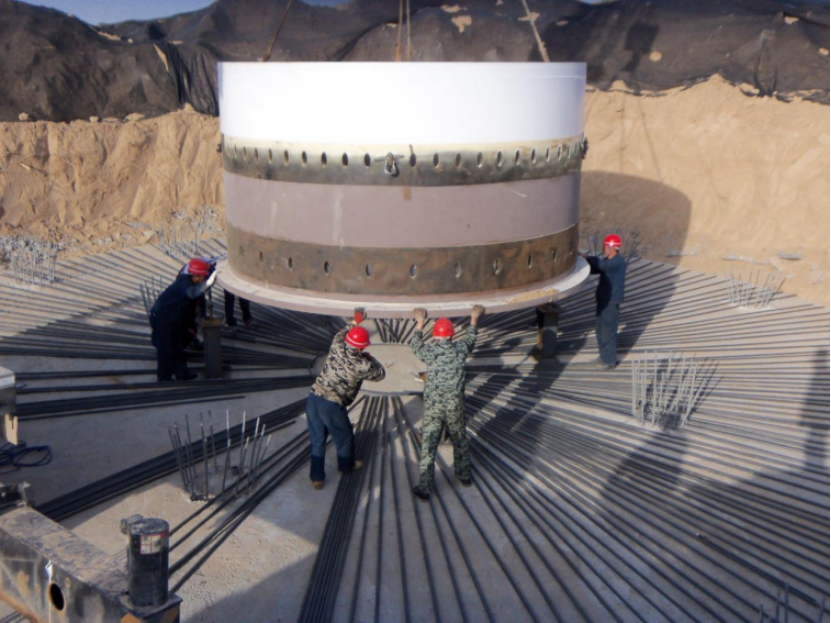
Installation of a wind turbine foundation ring at the Fanshigou Wind Farm in 2010
He said that every stage of the project was new to the team, so they had to learn as they went. They sought advice from other companies and held repeated meetings with power grid operators and design institutes.
"We met at least two or three times a week, discussing every issue in detail, almost like an academic seminar."
Living conditions were even tougher. The project team was based in villagers' homes, drank water from underground cisterns and asked local residents to help prepare meals. There was no fixed schedule, and they often did not get to bed until 11 p.m. The support of local residents warmed the hearts of the construction team.
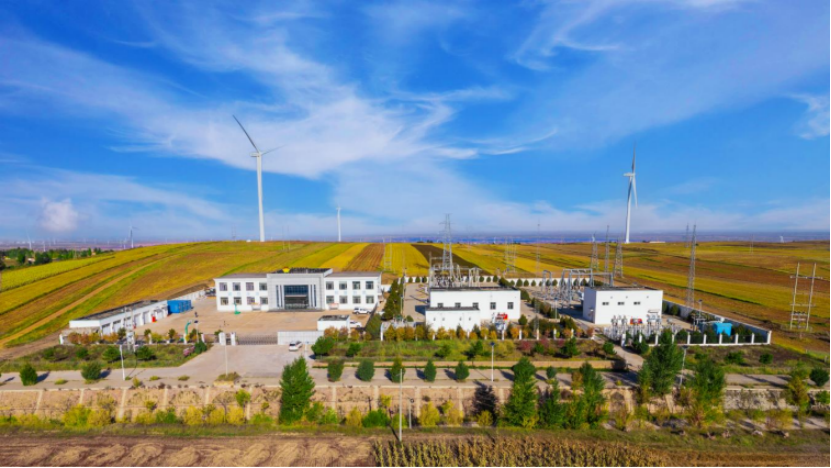
The Fanshigou Wind Farm, Shaanxi's first wind farm
"Conditions were tough back then, but everyone had a simple goal and was determined to get the job done," He said. "Looking back now, those experiences have become valuable lessons. The pressure we faced at the time later became the motivation to overcome one challenge after another."
Later projects, including Jishanliang, Xinzhuang and Zuozhuang, largely followed the construction model established at Fanshigou. As more companies recognized Dingbian's wind power potential, China Huaneng, State Power Investment Corporation and China Datang, among others, began investing in the area. Wind power in Dingbian, and eventually across Shaanxi, gradually developed on a larger scale.
"As the turbines began turning and roads were built, local development also picked up speed," He said.
Pioneering the Golden Sun initiative
Travel south from Dingbian to Jiulitan in Jingbian County, where rows of solar panels at the Luhe Photovoltaic Power Station stretch across the river flats. Sunlight gives their surfaces a blue sheen, while grass beneath them sways in the breeze.
In 2009, China's Ministry of Finance, Ministry of Science and Technology, and National Energy Administration jointly launched the Golden Sun Demonstration Program, providing fiscal subsidies to support demonstration applications of photovoltaic power generation. At the time, solar power was expensive, and many organizations were still waiting to see how the technology would develop. Of the projects submitted by Shaanxi, only two were ultimately built. Luhe was one of them.
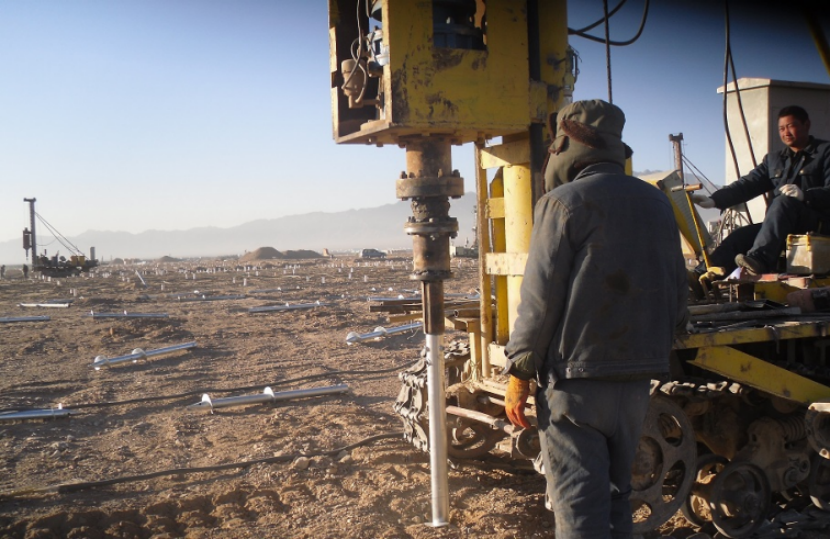
Workers installing steel piles at the Luhe Photovoltaic Power Station in 2010
"The project had an installed capacity of 5,000 kilowatts. It was not large, and its significance lay more in responding to the national initiative than in the project itself," recalled Su Yuefeng, general manager of Yushen Thermal Power under CHN Energy Shaanxi Company. Through the demonstration project, CHN Energy explored ways to develop additional photovoltaic resources, while helping drive the research, development and application of related equipment. Though small, the project allowed the team to work through every key stage, from design and construction to grid connection, leaving behind experience that could be replicated.
The Luhe photovoltaic project and the Fanshigou wind power project moved forward at almost the same time, one in Jingbian and the other in Dingbian. Both faced similarly difficult construction conditions. Jiulitan had once been a grassy river flat, with a high groundwater table. Digging less than half a meter into the ground was enough for groundwater to seep out. The construction contractor set up temporary facilities and provided the project team with two office rooms. Managers rented two apartments in Jingbian County and hired vehicles to travel to and from the site each day. They prepared their own meals and took only one day off a month. Those whose families lived elsewhere often went home only once every month or two.
With no established experience to draw on, the team learned by doing, gradually mastering the practicalities of building and operating a photovoltaic power station.
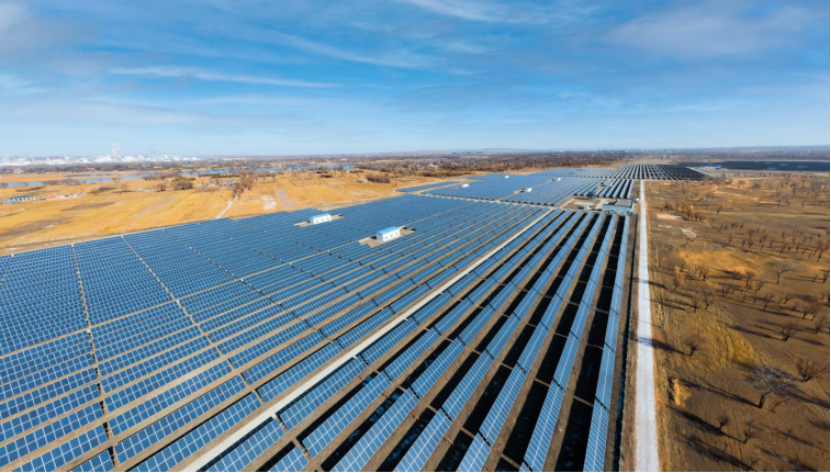
The Luhe Photovoltaic Power Station, Shaanxi's first photovoltaic power station
Looking back, Luhe was one of Shaanxi's first Golden Sun demonstration projects and its earliest photovoltaic power stations. Su said that solar power was still a new concept at the time, and someone had to take the lead in exploring the way forward. The Luhe project witnessed China's photovoltaic industry evolve from demonstration projects to large-scale application. Though modest in size, it planted a seed, paving the way for the development of ground-mounted solar power in Shaanxi.
Wind and solar power drive regional development
From the early projects at Fanshigou and Luhe, CHN Energy Shaanxi Company has steadily expanded its new energy operations, which now cover 25 counties and districts across Shaanxi Province.
To date, the company's total installed power generation capacity in Shaanxi has reached 10.7527 million kilowatts, including 4.71 million kilowatts of thermal power, 2.7595 million kilowatts of wind power, 3.2312 million kilowatts of photovoltaic power and 52,000 kilowatts of hydropower. Its installed new energy capacity ranks first among power generation companies in the province. The company currently has another 507,500 kilowatts of wind power capacity and 319,000 kilowatts of photovoltaic capacity under construction, while projects totaling a further 2.565 million kilowatts have been approved and are awaiting construction.
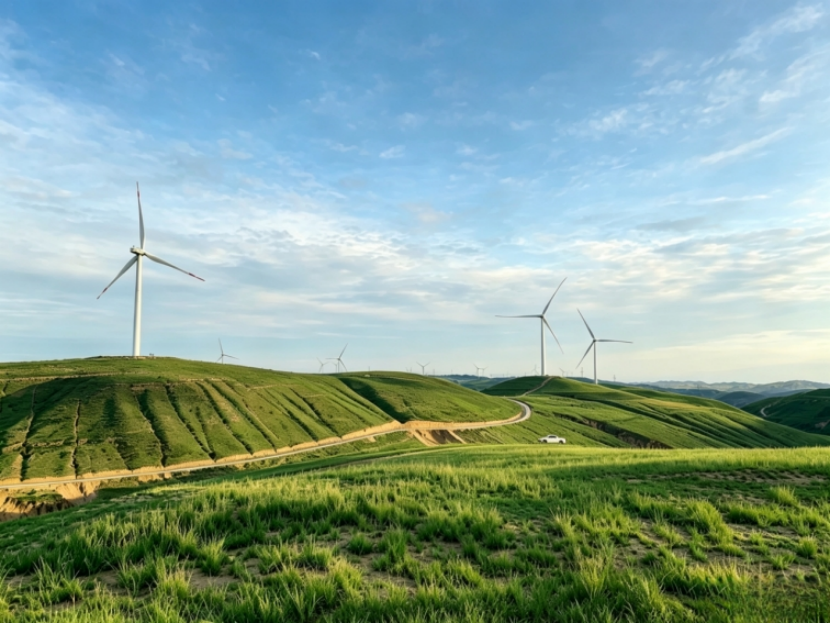
A wind power project operated by CHN Energy Shaanxi Company in Shaanxi Province
Behind these figures is a growing fleet of wind turbines and expansive solar arrays across Shaanxi's loess plateaus and ridges. In Dingbian, the Fanshigou Wind Farm remains in operation, regularly ranking among the region's leading projects in equivalent full-load hours and electricity generation at monthly meetings to review generation plans. Subsequent projects, including Xinzhuang and Zuozhuang, continue to contribute, while the Luhe Photovoltaic Power Station in Jingbian and other projects, including Gaojiagou and Jishanliang, have also entered operation. While ensuring reliable energy supplies, CHN Energy continues to fulfill its social responsibilities in Shaanxi and actively participates in assistance programs in Hanzhong. By advancing energy security, the green transition and social responsibility together, the company is striving to build a provincial power company that is a regional leader and a model within the Group.
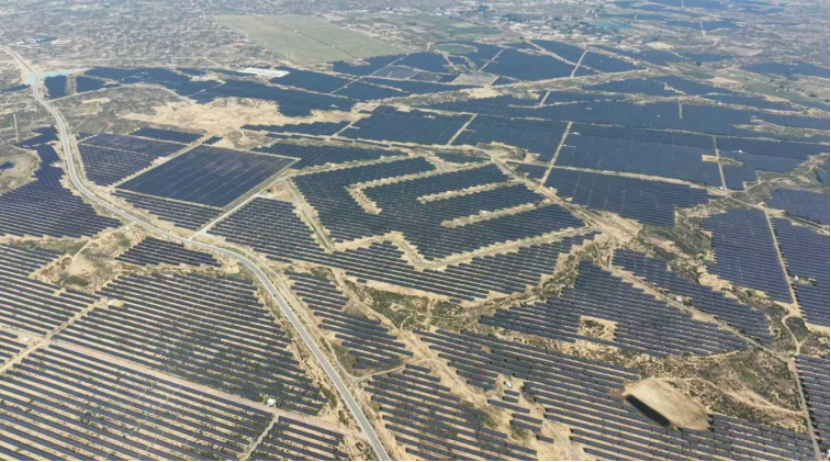
A PV project operated by CHN Energy Shaanxi Company in Shaanxi Province
Today, He Yongjian remains busy on the front lines of project construction. He said that when the team of five switched from thermal power to new energy, they relied on learning as they went, and that this determination must not be lost now that conditions have improved. Su Yuefeng said that construction work is demanding but also helps people grow. Seeing a barren river flat transformed into a power station, he added, brings a deep sense of satisfaction.
Over 18 years, the way energy is developed and used has changed, but the spirit of daring to break new ground, taking action and working hard through adversity remains the same. The wind sweeps across the plateau, passing over turbines and solar panels. A new story is unfolding across the gullies and ridges of the loess plateau, written by the wind and the sun.

